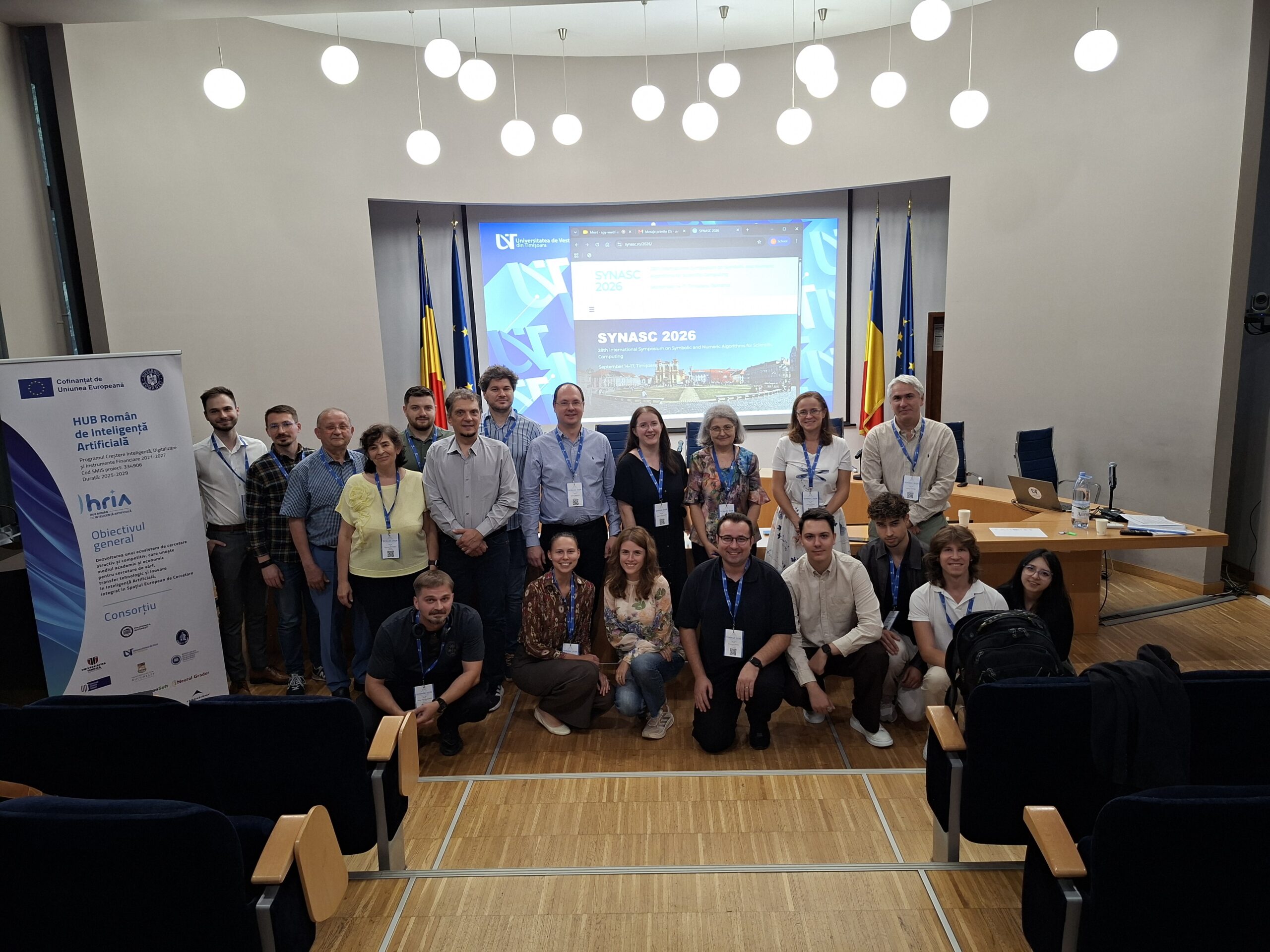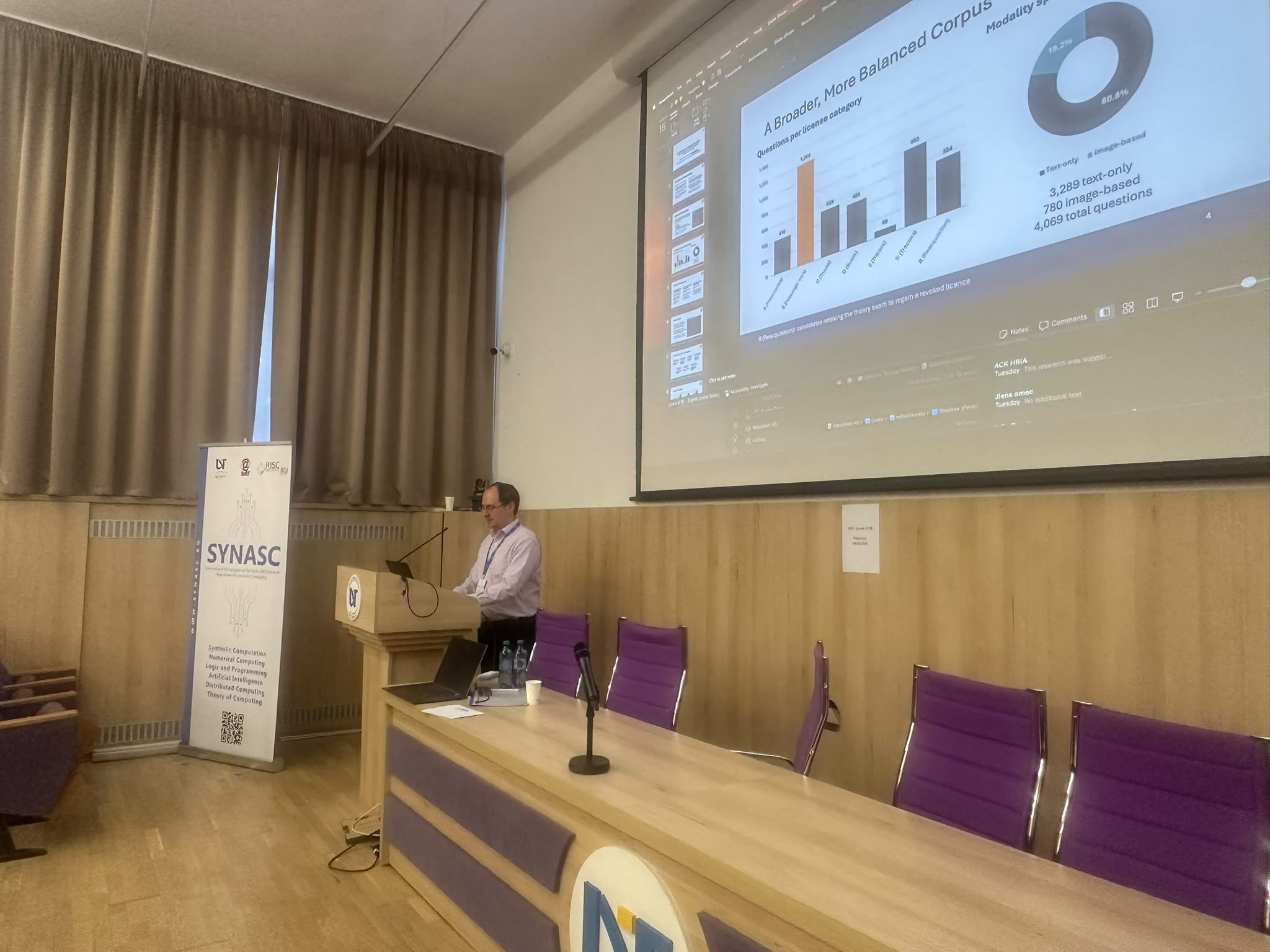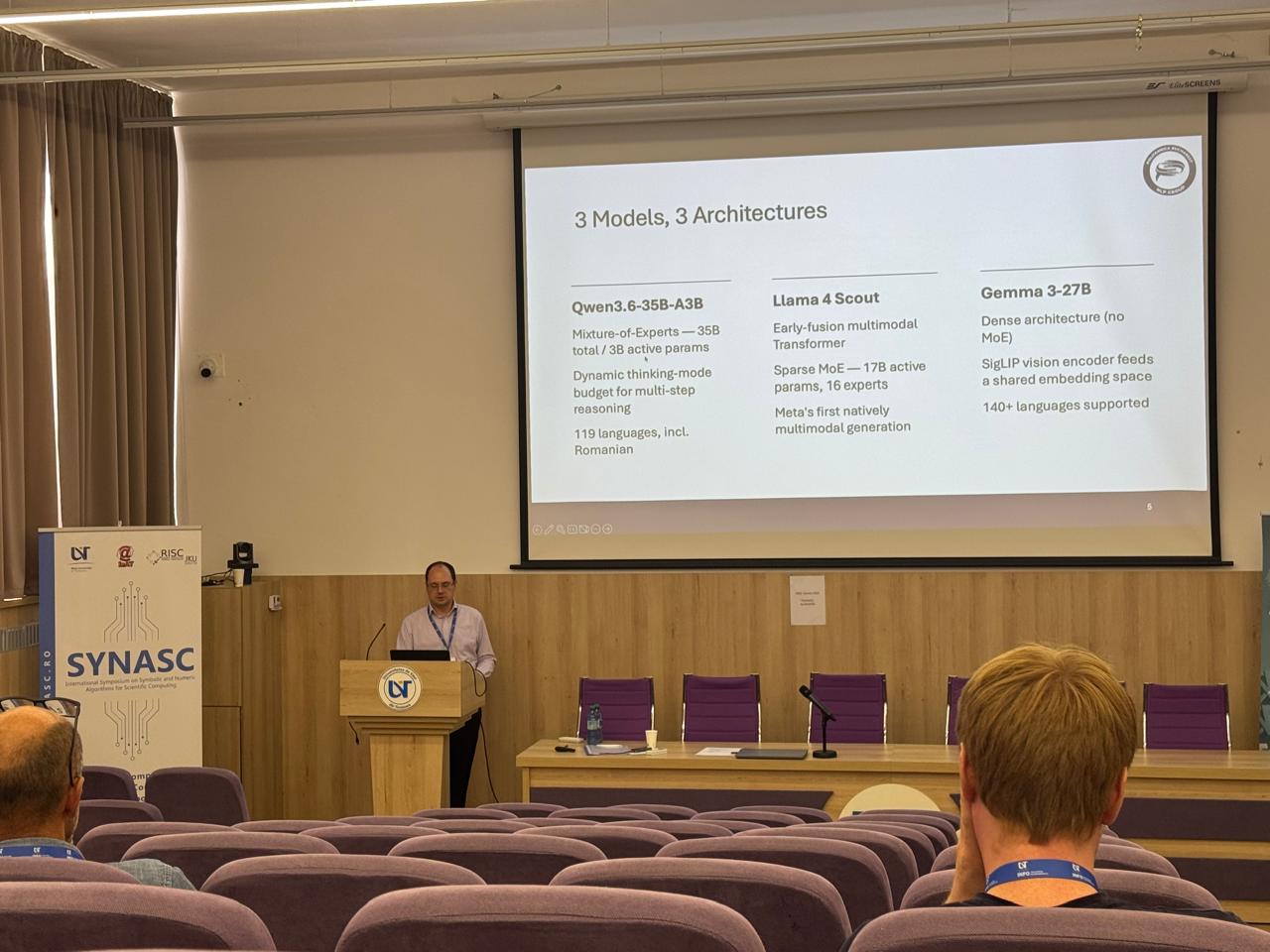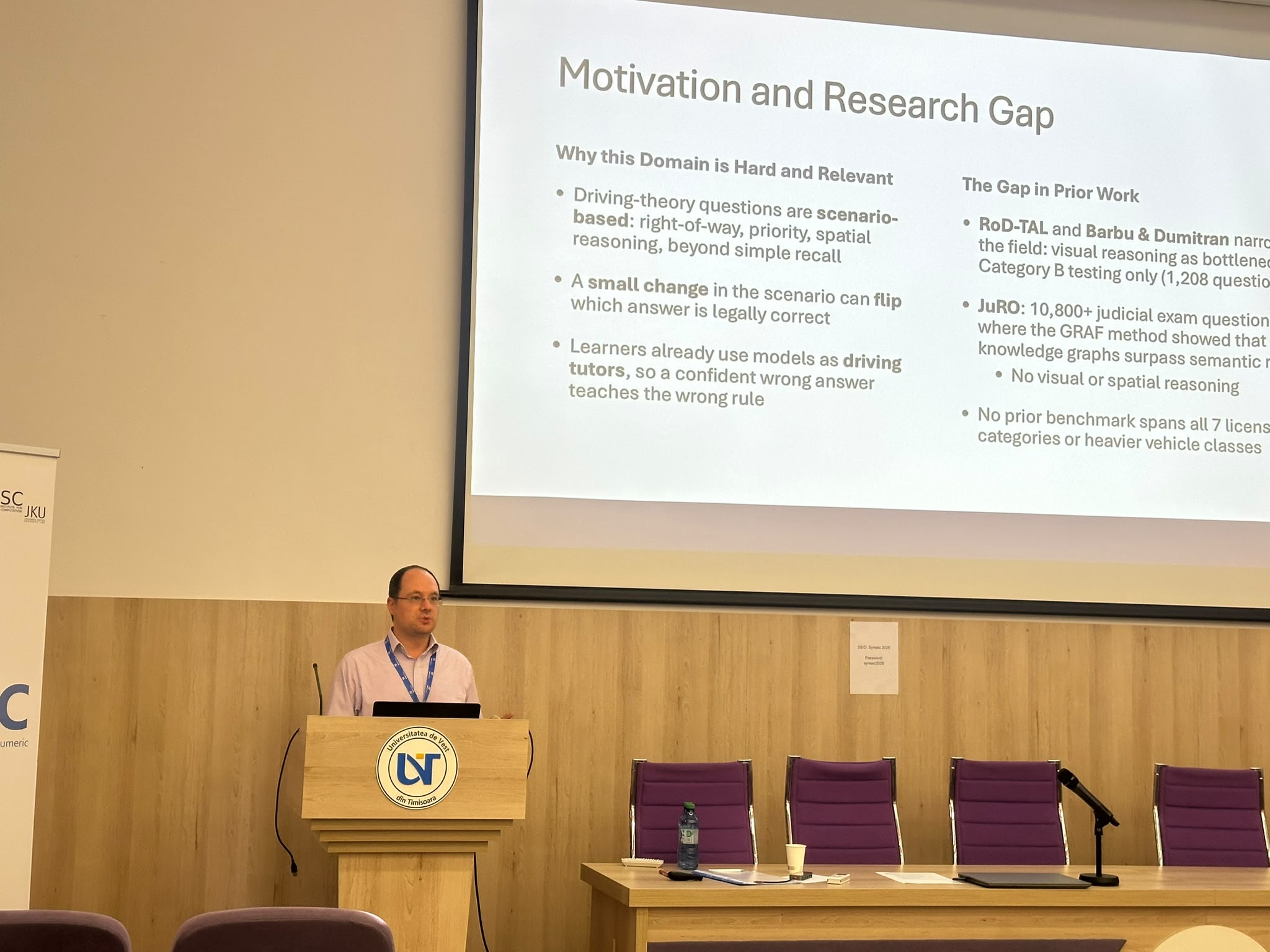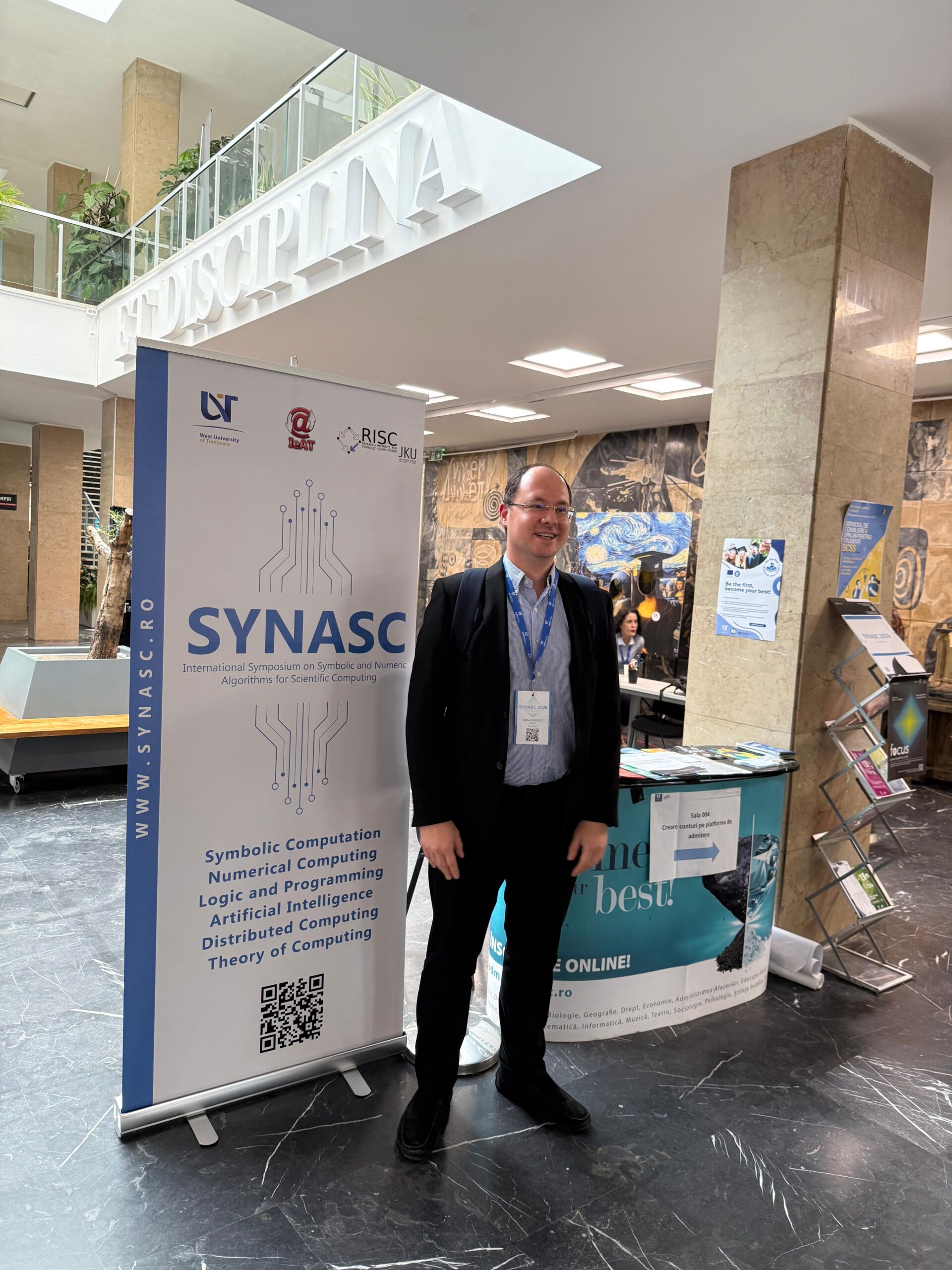


During the international symposium SYNASC – Symbolic and Numeric Algorithms for Scientific Computing, held at the West University of Timișoara (UVT) from 14 to 17 September 2026, the Romanian Hub for Artificial Intelligence – HRIA organized three activities aimed at disseminating research results and facilitating collaboration among partners:
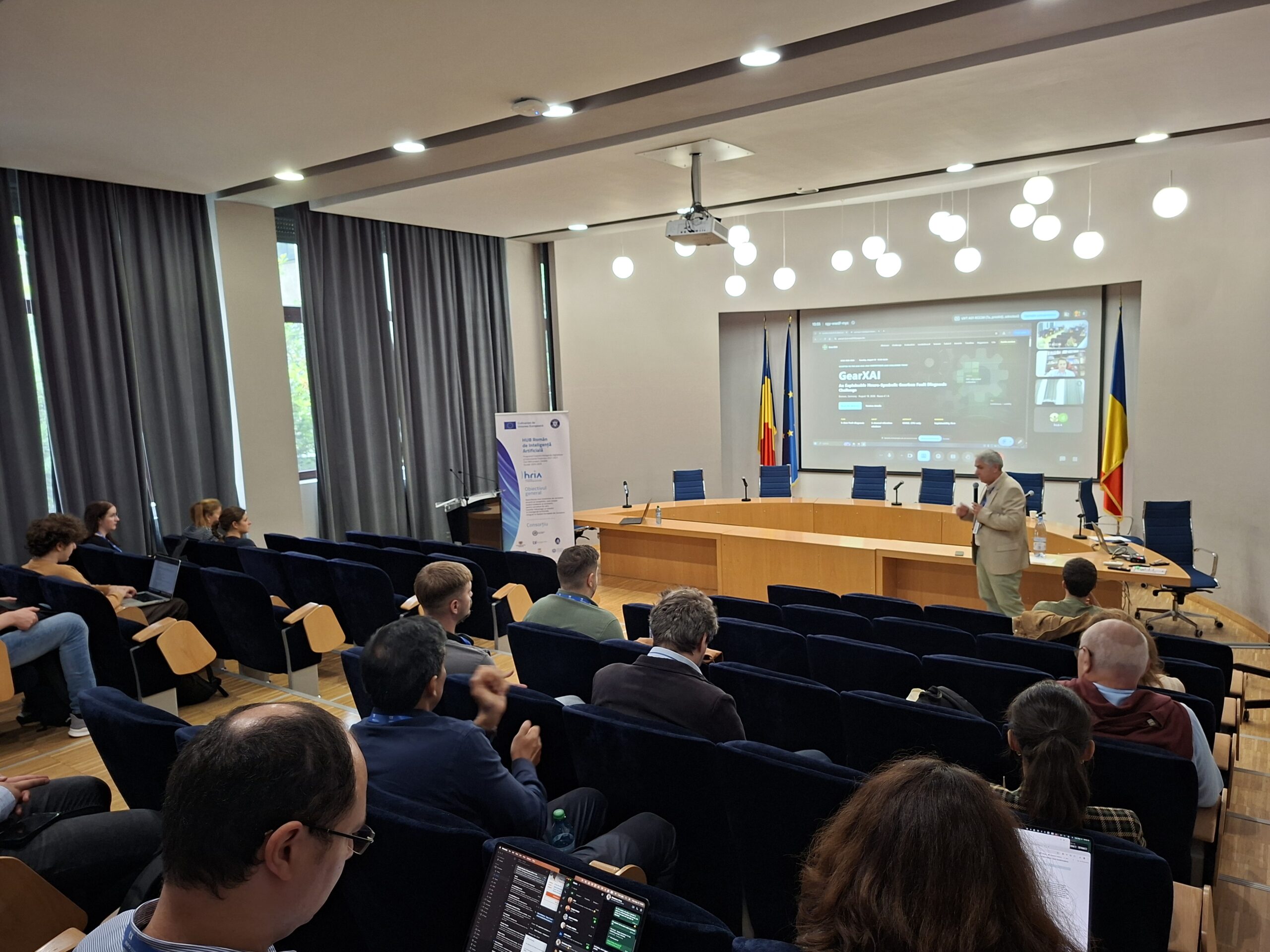
- The special session NSAI (Neuro-Symbolic Artificial Intelligence), co-organized by the West University of Timișoara and Gheorghe Asachi Technical University of Iași, aimed to facilitate collaboration among researchers working on neuro-symbolic models, intelligent agents incorporating symbolic reasoning, and platforms enabling the hybridization of deep learning models with logical constraints and explainability components. Seven presentations were delivered during the session, covering applications of neuro-symbolic models in medicine, industrial fault diagnosis, computer vision, and other application areas. One of the presentations was given by the winner of the GEARXAI NeuroSymbolic competition, organized at IJCAI 2026 by members of the XAI group at UVT, coordinated by Prof. Darian Onchiș, together with researchers from Xi’an Jiaotong University, China.
- The thematic workshop WSAI (Remote Sensing, Computer Vision and AI for a Sustainable Future) aimed to bring together researchers and industry experts interested in integrating artificial intelligence, intelligent systems, and advanced computational methods into remote sensing and computer vision applications. The workshop emphasized innovative methodologies and systems using multimodal data, distributed computing, and machine learning to address challenges related to climate change, environmental monitoring, and sustainable resource management. Six presentations were delivered, addressing topics such as intelligent time-series processing techniques with applications in health monitoring, analysis of the impact of climate change on the number of patients presenting to hospital emergency departments, and ground displacement monitoring; as well as hybrid methods for processing multimodal data, with applications in medical image analysis, object identification in traffic imagery, and the detection of monuments or heritage buildings in satellite images.
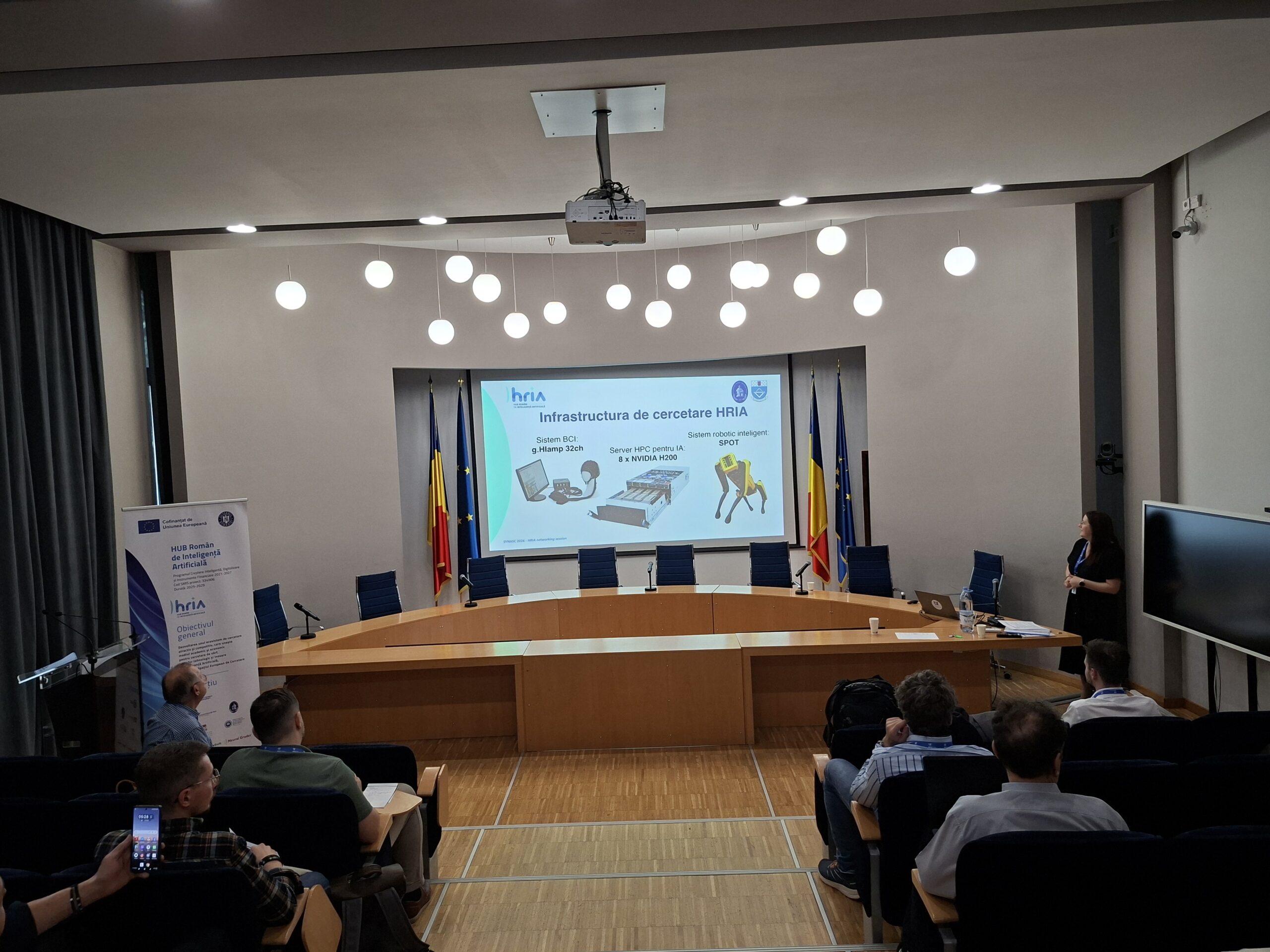
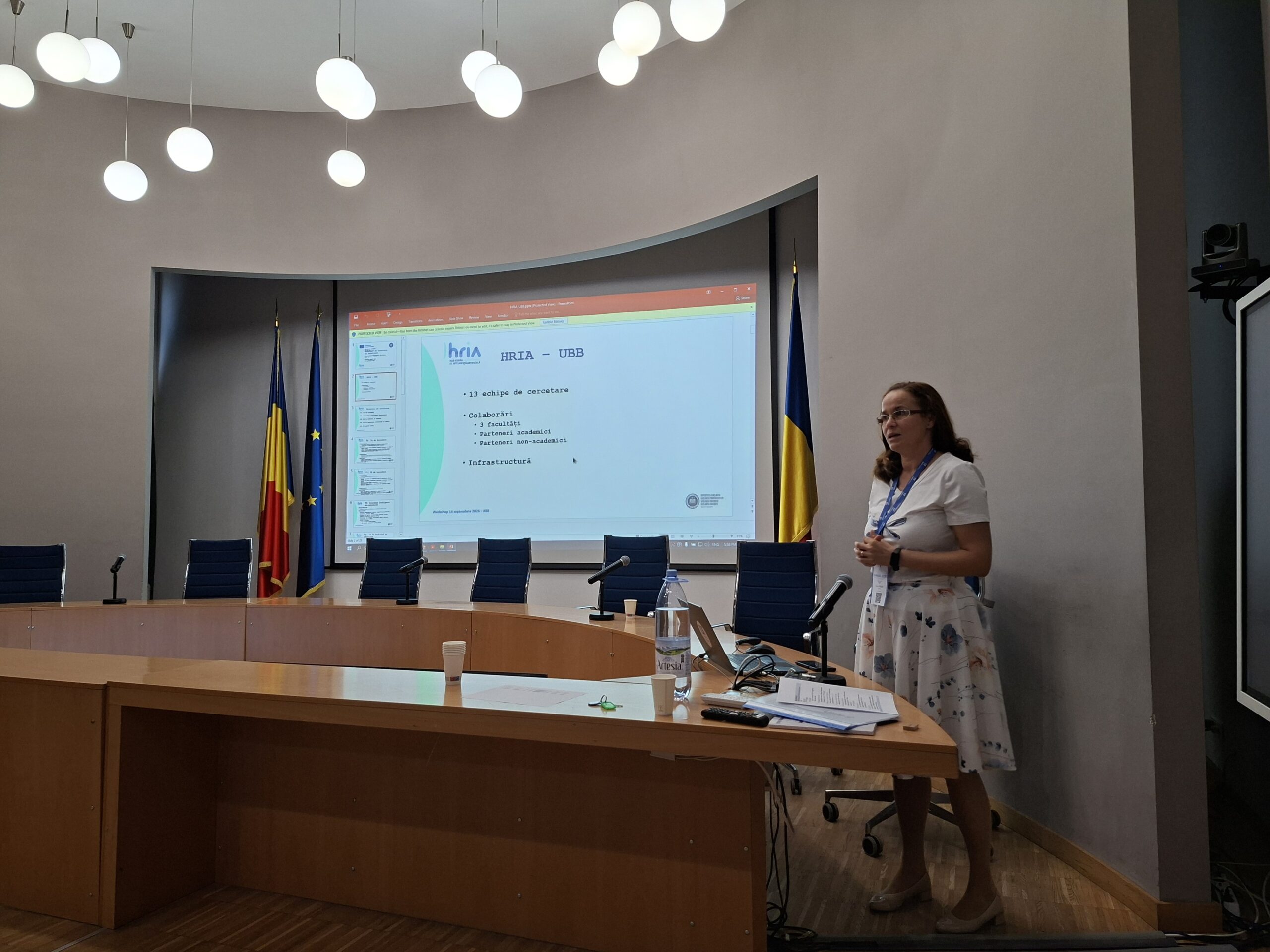
- The HRIA networking session was organized to facilitate communication and identify new directions for collaboration among HRIA consortium members attending SYNASC 2026. In this context, representatives of five academic partners in the HRIA consortium (National University of Science and Technology POLITEHNICA Bucharest, Babeș-Bolyai University of Cluj-Napoca, Gheorghe Asachi Technical University of Iași, Politehnica University Timișoara, and the West University of Timișoara) presented the current research directions of their teams, with particular emphasis on open problems and on areas where the expertise of consortium partners could be beneficial. The presentations were followed by discussions on the challenges and opportunities associated with the HRIA project, as well as examples of good practice. The Data Sweep application was also presented during this session as a useful documentation resource, especially for doctoral students.
These three activities provided a suitable framework for presenting the latest results in research areas related to artificial intelligence and its applications in a wide range of domains, including medical diagnosis support, monitoring of industrial equipment, environmental event monitoring, decision support in autonomous vehicles, and cultural heritage preservation. The approaches presented were characterized by a strong emphasis on the development of explainable and energy-efficient systems, while the diversity of the applications contributed to strengthening a community dedicated to building responsible and transparent AI technologies with social and environmental impact.