


The Romanian Hub for Artificial Intelligence (HRIA) participated in the first edition of the National Conference “Artificial Intelligence in Romanian Research”, organized by the Institute of Legal Research “Acad. Andrei Rădulescu” of the Romanian Academy, Dimitrie Cantemir Christian University, and Universul Juridic Publishing House. Held in the Aula Magna of the National University of Science and Technology POLITEHNICA Bucharest, the event brought together researchers, professors, and experts in law, technology, medicine, cybersecurity, and mass media for an extensive dialogue on the impact of artificial intelligence on society and national research.
The conference pursued two major objectives: promoting legal research on the regulation of artificial intelligence and stimulating interdisciplinary dialogue together with the transfer of knowledge between research and practice.
In relation to its first objective, the Institute of Legal Research “Acad. Andrei Rădulescu” facilitated academic debate on the legal implications of using artificial intelligence.
Regarding the second objective, the Institute aimed to bring together specialists from diverse fields — law, technology, medicine, mass media, and cybersecurity — to analyze the impact of artificial intelligence on society and on the legal system. This multidisciplinary dialogue strengthens the role of lega research in anticipating the challenges generated by emerging technologies and in shaping appropriate solutions for legal practitioners and decision makers.
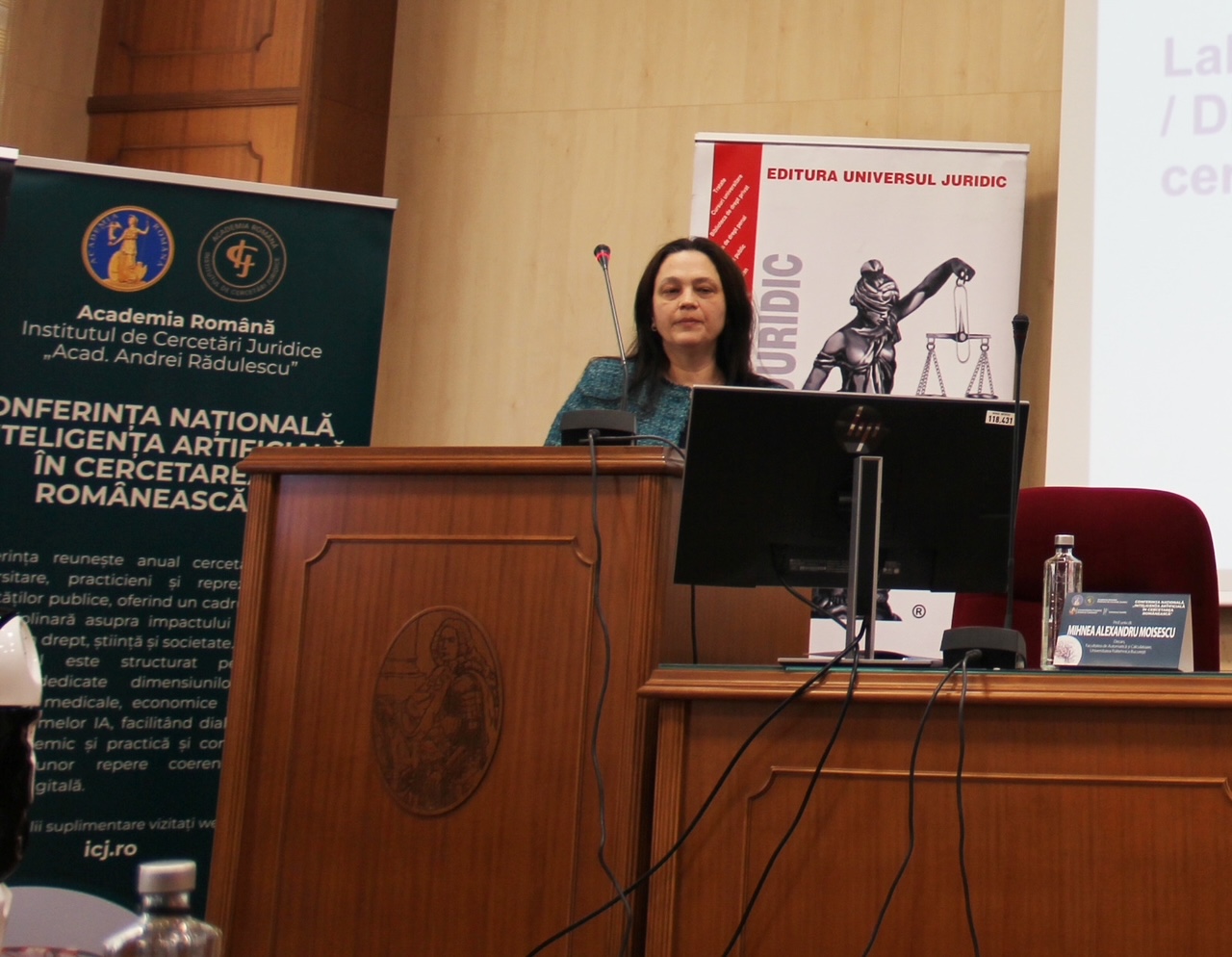
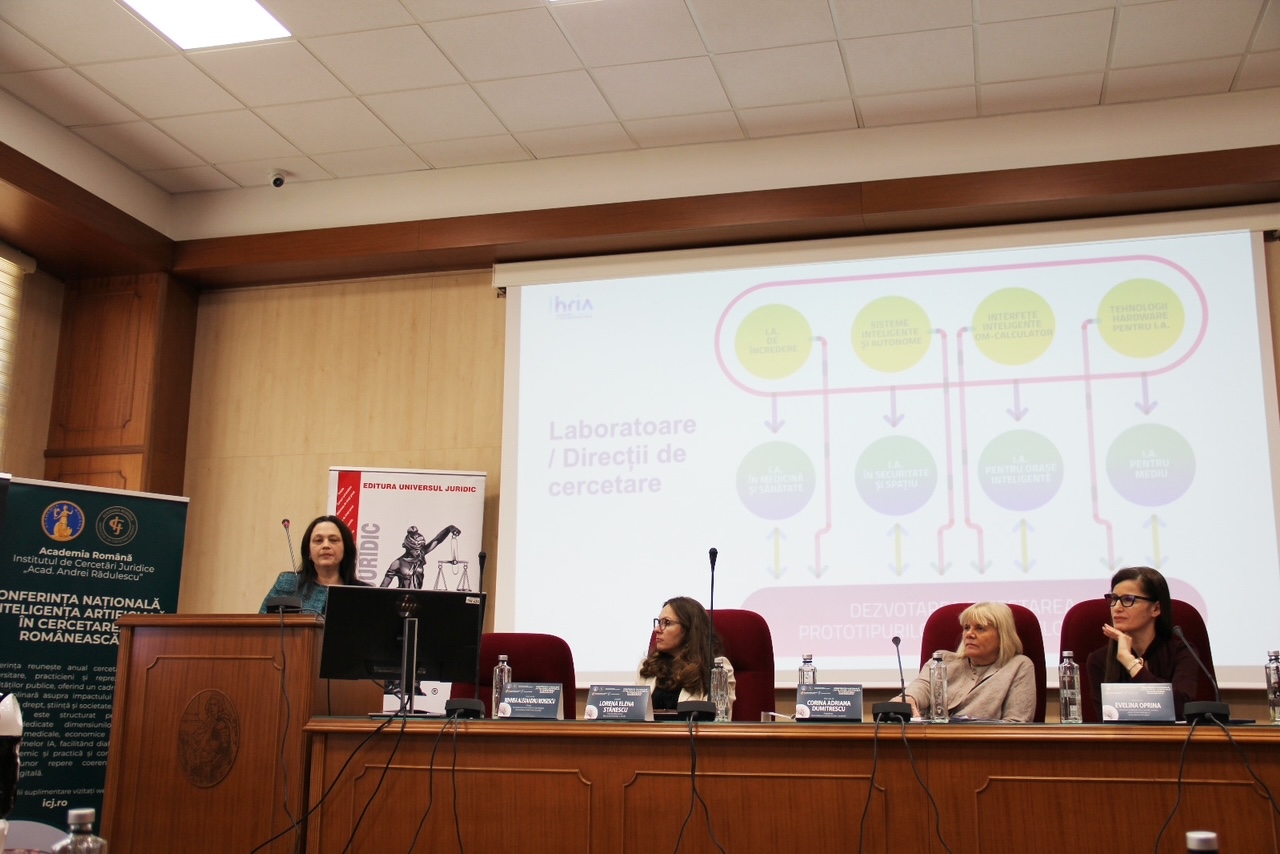
HRIA’s participation was highlighted by the intervention of Prof. Dr. Irina Mocanu during Panel 1 – “Artificial Intelligence – Opportunities and Science”. In her presentation, “The Romanian Hub for Artificial Intelligence (HRIA) – A Reference Point for Research Activity”, she emphasized HRIA’s strategic role in strengthening Romania’s AI research ecosystem and connecting it to European excellence initiatives. According to the conference program, “The Romanian Hub for Artificial Intelligence (HRIA) – A Reference Point for Research Activity” was one of the central presentations of the first day, underscoring the importance of collaboration between academia, public institutions, and industry.
Throughout the two days, the conference addressed essential themes for the future of AI in Romania: from regulation and ethics to applications in medicine, cybersecurity, justice, art, and mass media. The official document notes that the event aims to “promote legal research on the regulation of artificial intelligence” and “stimulate interdisciplinary dialogue and the transfer of knowledge between research and practice.”
Through its participation, HRIA reaffirmed its commitment to supporting the responsible development of artificial intelligence in Romania and contributing to the foundation of public policies and research directions aligned with European standards. The presence of Prof. Dr. Irina Mocanu strengthened HRIA’s visibility within the academic and professional community at a time when AI is becoming a strategic priority at both national and European levels.